2026 Top Thermos Water Bottle Suppliers for Global Buyers?

Time:2026-09-21 Author:Amelia
0%

The 2026 sourcing landscape is making the Thermos Water Bottle more than a simple hydration product. Buyers now assess thermal performance, material safety, factory consistency, and delivery reliability together. A polished sample means little if the next production batch leaks.

Grand View Research reported that the global reusable water bottle market reached approximately USD 9.67 billion in 2023. Its forecast also indicates continued growth through 2030. This trend reflects demand for durable, reusable alternatives to disposable packaging. However, market growth does not guarantee supplier quality. That distinction matters.

This guide reviews leading Thermos Water Bottle suppliers for global buyers in 2026. It considers stainless steel grades, vacuum insulation, lid design, coating durability, and testing practices. A dependable supplier should provide traceable material documentation and practical test records. Buyers should also check food-contact compliance for each destination market. Requirements can differ across the United States, European Union, United Kingdom, and other regions.

Look beyond catalog photographs.

The World Stainless Association continues to identify stainless steel’s durability and recyclability as important advantages in consumer products. Still, recyclability depends on product construction and local collection systems. Some suppliers make sustainability claims without offering measurable evidence. That weakness deserves attention.

Supplier evaluation should include factory audits, sample testing, production capacity, minimum order quantities, and export experience. Ask for leak tests, insulation results, coating adhesion data, and packaging specifications. Confirm whether the quoted price includes custom molds, printing, inspections, and shipping terms. Small omissions can become expensive problems.

No supplier ranking is permanently correct. Costs, compliance records, lead times, and customer service can change quickly. This introduction therefore uses published market research, supplier evidence, and practical sourcing criteria to support more careful decisions.
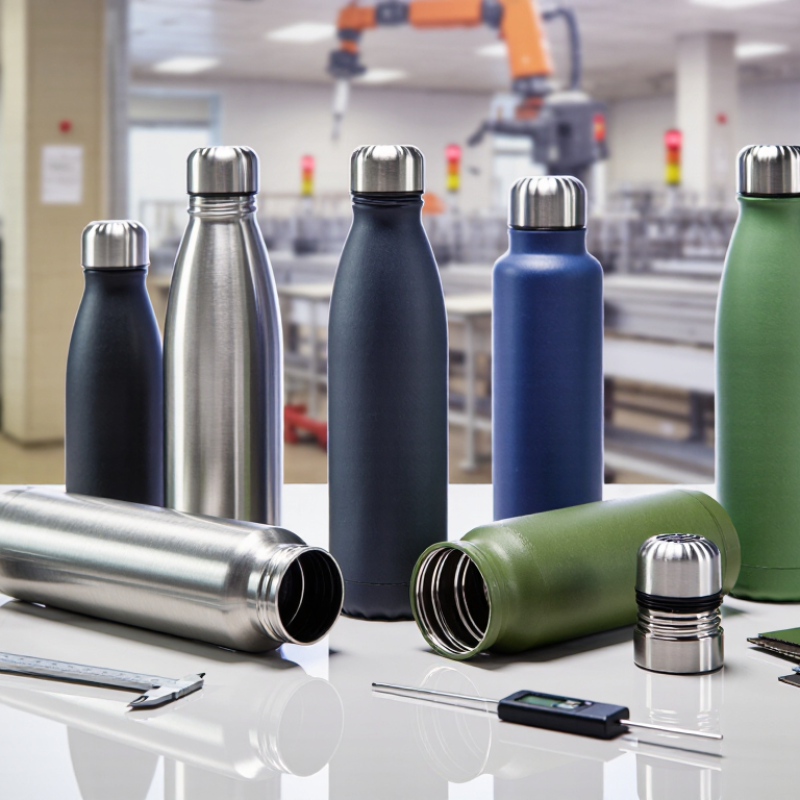
2026 Top Thermos Water Bottle Suppliers for Global Buyers?

Thermos Water Bottles: Types, Materials, and Global Market Applications

Thermos water bottles are no longer limited to hiking or winter travel. They now serve offices, schools, fitness centers, commuting, and outdoor work. Grand View Research valued the global reusable water bottle market at approximately USD 8.64 billion in 2023. It also forecasts steady growth through 2030. Demand is practical, not purely fashionable.

Bottle type strongly affects purchasing decisions. Double-wall vacuum bottles provide better heat retention for coffee, tea, and cold water. Single-wall stainless steel models are lighter and usually cheaper. Plastic insulated bottles reduce weight further, but buyers should check odor resistance and long-term durability. Stainless steel remains popular because it feels solid, cleans easily, and supports repeated use. However, heavier models can discourage daily carrying. That detail is often missed.

Material choice should match the application. Copper-lined designs can improve thermal performance, while food-contact stainless steel supports safer export positioning when properly tested. For global buyers, suppliers should provide insulation test records, leak testing, material declarations, and clear capacity measurements. The European Commission’s reusable products research highlights durability and repeated use as important sustainability factors. Mordor Intelligence also identifies expanding outdoor and sports consumption as a major market driver. Still, report figures differ because research firms define “reusable bottle” differently. Buyers should compare product specifications, not only market forecasts. A perfect bottle does not exist. Real users may prefer a 500-milliliter bottle that fits a car holder over a larger model with better insulation.

Key Criteria for Evaluating Thermos Water Bottle Suppliers in 2026

Key Criteria for Evaluating Thermos Water Bottle Suppliers in 2026

Global demand is becoming more quality-sensitive. IMARC Group’s 2024 analysis estimated the reusable water bottle market at about USD 8.7 billion in 2023, with continued growth through 2032. This growth attracts capable factories, but also inconsistent suppliers. Buyers should verify stainless-steel grades, wall thickness, vacuum performance, and lid durability through independent laboratory reports. A polished sample proves very little.

During factory evaluations, I examine material certificates, production records, leak-testing procedures, and batch traceability. Suppliers should explain whether they use food-contact compliant materials and provide documentation for relevant markets. ISO 9001 certification helps, but it cannot replace process audits. Ask for random samples from finished production, not only showroom pieces. Small details matter: thread alignment, silicone odor, coating scratches, and cap opening force.

Capacity deserves equal attention. A supplier may quote a low price while lacking enough welding stations, inspection staff, or replacement parts. Request monthly output data, defect rates, lead times, and contingency plans. The 2024 Global Stainless Steel and Alloy Market analysis identified ongoing demand for durable stainless products, yet material prices can shift quickly. I have seen attractive quotations become expensive after tooling, packaging, and freight changes. That is why transparent cost breakdowns and written quality agreements matter. One weakness remains: many buyers compare price before validating evidence.

2026 Thermos Water Bottle Supplier Evaluation Priorities

A neutral 100-point procurement scorecard for global buyers. The weighting emphasizes food-contact safety, product performance, and supply-chain reliability without using company or brand data.

Buyers should verify each criterion with current compliance documents, laboratory test reports, production samples, traceability records, and confirmed commercial terms before approving a supplier.

Leading Supplier Regions and Manufacturing Capabilities Worldwide

In 2026, China remains a major sourcing region for insulated water bottles. Its factories commonly offer deep drawing, laser welding, vacuum insulation, and automated polishing. Large production clusters support private-label orders, varied lid designs, and competitive tooling costs. Many suppliers also provide powder coating, silicone components, and carton customization. Practical audits should verify weld consistency, vacuum retention, and leak-test records. Samples can mislead.

India is expanding its stainless-steel bottle manufacturing capacity, especially for domestic and export programs. Suppliers often combine metal forming with manual assembly and flexible small-batch production. This can suit buyers testing new sizes or seasonal designs. Vietnam offers growing capabilities in assembly, surface finishing, and export packaging. Its developing supplier base may provide useful diversification, but process depth differs widely between factories. Capacity matters.

European and North American suppliers usually compete through engineering control, traceability, and specialized materials rather than the lowest unit price. They may support recycled stainless steel, precision insulation, ergonomic prototypes, and stricter documentation. However, higher labor costs can affect large-volume pricing. A credible supplier should share material certificates, food-contact test reports, quality-control plans, and realistic production timelines. Buyers should inspect the factory, not only the showroom. Some impressive facilities outsource critical steps. That weakness deserves attention. Regional comparisons also need caution, because one supplier can outperform an entire manufacturing cluster in quality, communication, and corrective action.

Product Quality, Safety Standards, and Customization Options

For global buyers, a thermos bottle is more than a printed container. Grand View Research reports that the global reusable water bottle market is expected to grow steadily through 2030, increasing pressure on suppliers to prove quality. Buyers should request stainless-steel grade certificates, material traceability, and production batch records. Food-contact compliance matters. Depending on the destination, suppliers may need evidence aligned with FDA requirements, EU Regulation 1935/2004, REACH, or LFGB testing.

Safety must be tested, not simply promised. Independent laboratories can check heavy-metal migration, odor, coating adhesion, and plastic-part composition. Vacuum decay testing helps identify invisible insulation failures. Leak testing should cover the cap, gasket, and drinking spout. A glossy sample can still fail. I would also request thermal-retention results after repeated opening and washing, because one laboratory test may not reflect daily use. ISO 9001 certification supports process control, but it does not replace product testing.

Customization should preserve function. Buyers can select 304 or 316 stainless steel, powder coating, laser engraving, handle designs, and different lid systems. Custom molds require careful review of wall thickness and cleaning access. Small details matter. A narrow opening may look elegant but frustrate users. Suppliers should provide pre-production samples, color references, packaging tests, and written tolerances. MarketsandMarkets identifies customization and sustainability as important growth factors in reusable drinkware, yet buyers should question vague environmental claims. Recycled content, coating composition, and recyclability need documents, not slogans.

Pricing, Minimum Orders, Logistics, and Supplier Verification Steps

2026 Top Thermos Water Bottle Suppliers for Global Buyers

Pricing often depends on steel grade, vacuum insulation, coating, lid design, and testing. In current supplier quotes, basic models may cost US$3–6 at 500–1,000 units. Custom colors and packaging can raise costs by 15–30%. Grand View Research estimates the global reusable water bottle market will keep growing through 2030, supporting wider factory capacity but not always better quality. Ask for a full cost sheet. Include tooling, samples, packaging, inspection, and spare parts.

Minimum orders are negotiable, though lower quantities usually increase unit prices. Request pre-production samples and a written defect standard. Verify the factory’s business license, export history, material certificates, and recent inspection records. Test the bottle for leakage, odor, thermal retention, and coating adhesion. A video call helps, but it is not proof. I once treated polished photos as strong evidence; that was a weak assumption. Independent inspection remains safer.

Tips: Compare FOB, CIF, and DDP quotations carefully. The World Bank’s 2023 Logistics Performance Index shows major differences in customs, infrastructure, and shipment reliability between markets. Confirm carton dimensions, gross weight, port, lead time, and insurance before ordering. Leave buffer time for production delays. Freight estimates can change quickly, so obtain a fresh booking quote before payment. Payment stages should follow verified milestones, not promises alone.

2026 Top Thermos Water Bottle Suppliers for Global Buyers? - Pricing, Minimum Orders, Logistics, and Supplier Verification Steps

Supplier Profile Common Production Region Typical Product Specification Indicative FOB Price Typical MOQ Sample Lead Time Bulk Production Lead Time Common Export Terms Best Fit for Buyers Key Verification Steps
High-volume stainless-steel factory Eastern China 304 stainless steel, double-wall vacuum insulation, 500–750 ml, standard screw lid US$2.20–5.00 per unit 1,000–3,000 units per color or design 7–12 days 25–45 days after approved sample FOB, CIF, FCA, EXW Retail chains, distributors, and large promotional orders Check business registration, factory address, ISO 9001 evidence, material certificates, vacuum-retention test, and pre-shipment inspection.
Mid-sized custom-design manufacturer Southern China 304 or 316 stainless steel, powder coating, laser engraving, custom packaging US$3.00–7.50 per unit 500–2,000 units per design 10–15 days 30–50 days FOB, CIF, DDP by quotation Private-label programs and online-commerce sellers Confirm artwork ownership, coating durability, food-contact compliance, packaging specifications, and production-capacity records.
Low-MOQ trading and assembly supplier Coastal China Stock 304 stainless-steel bottles, standard colors, basic logo printing US$2.80–6.00 per unit 100–500 units 5–10 days for stock samples 15–30 days EXW, FCA, courier delivery Startups, test orders, and seasonal promotions Verify whether the supplier owns production equipment, request current stock photos, inspect random units, and confirm logo-printing limitations.
Premium insulation specialist East and South Asia 316 stainless steel, copper-plated inner wall, leak-resistant lid, 12–24 hour thermal performance target US$6.50–14.00 per unit 1,000–5,000 units 10–18 days 40–60 days FOB, CIF, DAP Premium retail, hospitality, and corporate-gifting channels Request thermal test data, lid-cycle testing, leak testing, steel-grade verification, and an independent factory audit.
Sports and travel bottle producer China, Vietnam, and Southeast Asia 500–1,000 ml bottles, wide-mouth opening, carry loop, straw or flip-top lid US$3.50–9.00 per unit 1,000–3,000 units 7–14 days 30–50 days FOB, CIF, DDP subject to destination Fitness retailers, outdoor distributors, and travel-product sellers Test bite-valve safety, silicone gasket quality, dishwasher claims, drop resistance, and leak performance under pressure.
Sustainable-material supplier China, India, and Southeast Asia Recycled stainless steel, recycled packaging, BPA-free components, plastic-reduction options US$4.00–10.00 per unit 1,000–5,000 units 12–20 days 35–60 days FOB, CIF, DAP Eco-conscious retailers and sustainability-led procurement programs Request recycled-content documentation, chain-of-custody evidence, packaging declarations, third-party lab reports, and environmental claims substantiation.
Regional contract manufacturer Vietnam, Thailand, Indonesia, and India 304 stainless steel, standard vacuum construction, regional packaging and assembly US$3.80–8.50 per unit 2,000–10,000 units 14–21 days 45–75 days FOB, CFR, CIF Buyers seeking regional diversification or alternative sourcing capacity Verify local manufacturing licenses, origin documentation, subcontracting arrangements, labor compliance, and consistency of material sourcing.
Corporate and promotional-product supplier China, India, and Turkey 350–750 ml bottles, gift boxes, logo printing, mixed-color assortments US$2.50–8.00 per unit 250–2,000 units 7–14 days 20–40 days EXW, FOB, DDP Events, employee gifts, conferences, and short-term campaigns Approve a physical pre-production sample, verify print color tolerances, confirm packaging counts, and use third-party quantity and quality inspection.
Buyer Notes: The prices, MOQs, and lead times above are indicative 2026 market ranges for standard commercial orders. Actual quotations vary according to steel grade, bottle capacity, lid design, surface treatment, printing method, packaging, order volume, testing requirements, destination, and Incoterms. Confirm all specifications through a written quotation, approved sample, independent inspection, and documented supplier due diligence before placing a deposit.

FAQS

What documents should buyers request from a reusable bottle supplier?

Request material certificates, production records, inspection reports, and batch traceability documents. Confirm food-contact compliance for your target market. ISO 9001 helps, but it does not replace a factory audit.

How can buyers verify stainless-steel bottle quality?

Check the steel grade, wall thickness, vacuum performance, and lid durability. Request random samples from finished production. Test leakage, odor, heat retention, and coating adhesion. A polished sample proves very little.

What factory details deserve close inspection?

Examine welding stations, inspection staff, replacement parts, and monthly production capacity. Ask for defect rates and typical lead times. Test thread alignment and cap opening force. Small details matter.

How should buyers evaluate supplier production capacity?

Request monthly output data, staffing information, and production records. Ask about backup equipment and replacement-part availability. A low price may hide limited capacity. Test real output.

What costs should be included in a bottle quotation?

Request a full cost sheet covering tooling, samples, packaging, inspection, and spare parts. Include freight, insurance, and possible color charges. Attractive quotations can change after production details shift.

How much might basic reusable bottles cost?

Basic models may cost about US$3–6 at 500–1,000 units. Custom colors and packaging can raise costs by 15–30%. Material grade and lid design affect pricing. Prices move quickly.

Are minimum order quantities negotiable?

They are often negotiable, but smaller orders usually increase unit prices. Request a pre-production sample and written defect standards. Do not accept vague quality promises. Not always easy.

How should buyers compare shipping quotations?

Compare FOB, CIF, and DDP quotations carefully. Confirm carton dimensions, gross weight, destination port, lead time, and insurance. Obtain a fresh freight quote before payment. Leave buffer time.

What payment and verification steps reduce supplier risk?

Verify the business license, export history, material certificates, and recent inspection records. Use independent inspection instead of relying on video calls or photographs. Tie payment stages to verified milestones. I once trusted polished photos. That was a weak assumption.

Conclusion

This guide helps global buyers understand how to select the right Thermos Water Bottle suppliers in 2026. It explains the main product types, including insulated stainless steel, lightweight aluminum, glass-lined, and reusable plastic options, along with their suitable applications in retail, outdoor activities, corporate gifting, hospitality, and daily use. Buyers will also learn how material quality, insulation performance, leak resistance, durability, design, and food-contact safety affect product value.

The article compares major supplier regions by manufacturing capacity, technical expertise, production flexibility, and export experience. It also outlines important evaluation factors such as quality control systems, safety documentation, customization services, packaging, pricing, minimum order quantities, lead times, and logistics support. To reduce purchasing risks, global buyers are encouraged to verify supplier backgrounds, request samples, inspect production capabilities, confirm specifications, review certifications, and establish clear agreements before placing large orders.

Amelia

Amelia

Amelia is a seasoned marketing professional with a wealth of expertise in our company’s core offerings. With an unwavering passion for driving growth and innovation, she plays a pivotal role in shaping our marketing strategies and enhancing brand visibility. A key aspect of her responsibilities......