2026 Best Vacuum Flask Thermos for Wholesale Buyers?

Time:2026-09-26 Author:Sophia
0%

Choosing the right Vacuum Flask Thermos for wholesale in 2026 requires more than comparing prices. Buyers must examine heat retention, material safety, leak resistance, production consistency, and after-sales support. A polished product can still fail when its lid loosens after repeated use.

James Dewar, the Scottish physicist whose vacuum vessel inspired the modern thermos, stated, “The object of my invention is to provide a vessel in which liquids may be kept hot or cold.” His principle remains practical today. Insulation performance still depends on the vacuum layer, inner wall design, and closure quality. Modern manufacturing adds stainless steel grades, silicone seals, powder coating, and automated testing.

Look closely.

For wholesale buyers, the best model should survive real handling. Imagine cartons moving through a warehouse, bottles riding in delivery vans, and customers opening a lid beside a steaming coffee machine. A reliable Vacuum Flask Thermos should resist dents, preserve temperature, and feel balanced in one hand. Independent laboratory reports can support these claims, but supplier records matter too. Ask for batch samples, test methods, food-contact documentation, and production lead times.

Some details remain easy to overlook. A wider mouth may improve cleaning but reduce thermal efficiency. A decorative finish may attract attention but scratch during shipping. I would not treat any ranking as permanent. Supplier performance changes, and field complaints sometimes reveal weaknesses that samples hide. This guide compares the 2026 options with those practical limits in mind, helping wholesale buyers choose dependable products rather than impressive specifications alone.
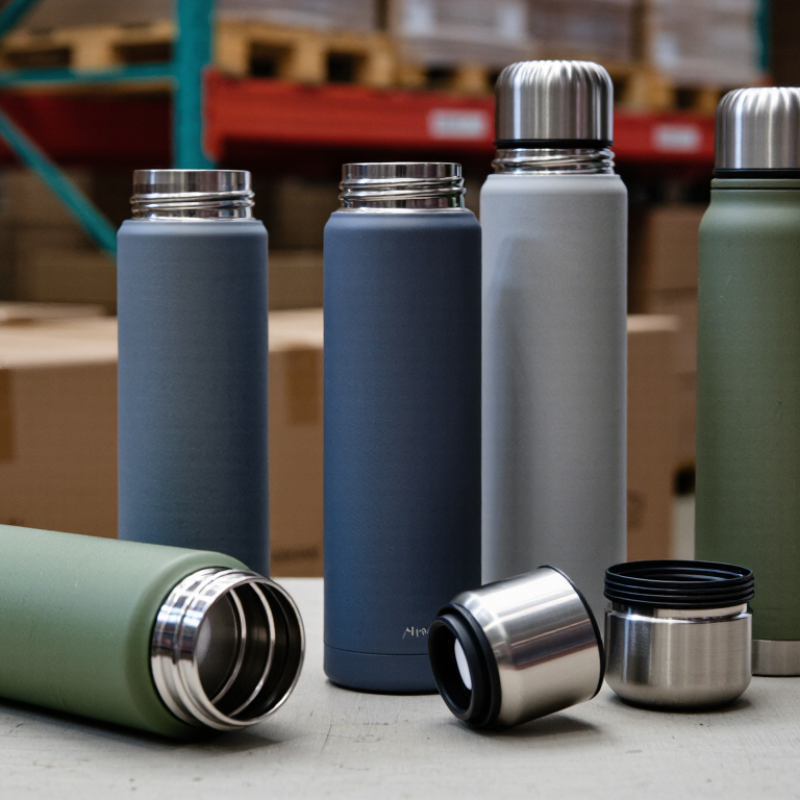
2026 Best Vacuum Flask Thermos for Wholesale Buyers?

Vacuum Flask Thermos Basics for Wholesale Buyers

Wholesale buyers should treat a vacuum flask as a small system, not just a steel bottle. The inner and outer walls create the vacuum insulation; the lid, gasket, and drinking opening affect daily use. Check the stated steel grade, capacity, empty weight, and lid construction. Small details matter. Grand View Research valued the global reusable water bottle market at USD 9.67 billion in 2023. Its report projected a 4.3% compound annual growth rate from 2024 to 2030. This category is broader than vacuum flasks, so it provides market context, not a flask-sales forecast.

Before placing a bulk order, compare samples under the same conditions. Fill each flask with the same water temperature, then record temperature changes after fixed intervals. Test for leaks with the flask upright and on its side. Measure the mouth opening, too; a narrow neck can make cleaning awkward. Ask suppliers for material documentation and clear test methods, rather than relying only on claims printed on packaging. A polished finish may look convincing, but it cannot prove insulation performance. Even a careful checklist misses something now and then, so record sample results and review them with the intended users.

Key Features That Define a High-Quality Thermos

A high-quality vacuum flask should keep drinks hot or cold without leaking, denting easily, or becoming awkward to use. Check the stated insulation performance, but ask how it was measured. Results are only useful when samples are tested under comparable conditions. A wide mouth makes filling and cleaning easier; a smooth rim feels better when drinking. Small details matter.

Inspect the lid, gasket, and threads closely. The lid should close evenly, and its seal should sit flat without twisting or pinching. A few drops of water around the cap can reveal a poor fit. Also check whether replacement seals are available, since a worn gasket may shorten the flask’s useful life. That is easy to overlook.

For wholesale orders, request production samples and examine several units, not just one polished prototype. Compare weight, finish, capacity, and packaging against the agreed specifications. Stainless steel quality and a durable exterior coating can affect everyday use, but neither should be judged by appearance alone. Ask for relevant material and quality-control documentation. Still, no inspection can predict every problem. Real customer feedback may expose issues that samples miss.

2026 Best Vacuum Flask Thermos for Wholesale Buyers: Key Quality Targets

These illustrative sourcing targets show the water temperature to verify after 6 and 12 hours. Test with a consistent fill volume, starting temperature, and ambient conditions. Hot-water targets are minimums; cold-water targets are maximums. They are buyer guidelines, not universal standards.

How to Compare Materials, Capacity, and Insulation Performance

For wholesale comparison, separate body material from thermal performance. The World Stainless Association’s Stainless Steel in Figures 2024 reports 58.4 million tonnes of global stainless-steel production in 2023. That scale supports broad sourcing, but it does not guarantee a consistent grade or finish. Ask suppliers to specify the steel grade, inner-wall thickness, lid materials, and food-contact documentation. A polished interior may look premium, yet weld quality and vacuum integrity matter more to daily performance.

Capacity changes how a flask fits real use. A 500 ml model suits a desk or commuter bag; larger sizes serve shared drinks but add weight when full. Check usable fill volume, not just the advertised capacity. For insulation, compare identical tests: same fill temperature, room conditions, lid handling, and measurement times. ASTM C177’s guarded-hot-plate method measures material heat transfer, but a flat sample cannot predict a complete flask’s performance. Request assembled-product temperature-retention data instead. Small details matter. A spreadsheet still misses awkward cup lids, slippery coatings, or a narrow opening that frustrates cleaning. Ask for test conditions and repeatability; one impressive number is not enough.

Wholesale Pricing, Certifications, and Supplier Evaluation

For 2026 wholesale planning, compare the full landed cost, not just the unit quote. Grand View Research estimated the global reusable water bottle market at USD 9.67 billion in 2023 and projected a 4.3% compound annual growth rate from 2024 to 2030. That signals sustained demand, but it does not guarantee sales for any particular flask. Request tiered pricing at several order quantities, and confirm whether tooling, individual cartons, testing, and freight are included. A quote that looks excellent on a spreadsheet may change after those costs appear.

Supplier evaluation should include recent, product-specific test reports. Check vacuum retention, leak resistance, lid durability, and food-contact migration results for the exact materials and finish being purchased. Ask which laboratory performed each test and whether the report identifies the same model and production materials. ISO 9001 may indicate a documented quality-management system, but it does not prove that every flask passes inspection. Review sample units, defect records, production lead times, and the supplier’s process for handling failed batches. One imperfect sample is useful evidence; dismissing it too quickly is not.

Tips: Get a sealed sample and written specifications before approving bulk production. Compare MOQ, payment terms, packaging, and delivery dates alongside price. Ask for evidence. A supplier’s reply may be polished; the records behind it matter more.

2026 Best Vacuum Flask Thermos for Wholesale Buyers? - Wholesale Pricing, Certifications, and Supplier Evaluation

Indicative product and sourcing benchmarks for comparing wholesale offers. Prices and specifications vary by order size, customization, testing scope, packaging, and destination market.

Product Type Typical Capacity Common Construction Indicative FOB Price (USD/unit) Typical MOQ Typical Production Lead Time Performance to Verify Relevant Compliance Checks Supplier Evaluation Points
Compact daily-use flask 350–500 ml 304 stainless-steel inner and outer walls; vacuum-insulated; screw lid $3.00–$6.50 500–1,000 units 25–40 days after approved sample and deposit Request hot- and cold-retention results with test conditions and elapsed time stated; inspect lid seal and leak resistance. Food-contact material documentation for the sales market; applicable migration testing; review coating and plastic-part documentation. Check steel grade evidence, weld and finish quality, sample consistency, carton drop protection, and written defect remedies.
Standard wide-mouth thermos 500–750 ml 304 stainless-steel body; vacuum-insulated; wide opening; stainless-steel or plastic lid $4.00–$8.50 500–1,000 units 25–45 days Compare temperature retention after 6, 12, and 24 hours using the same fill volume and ambient conditions; check cap leakage. For EU sales, assess applicability of Regulation (EC) No 1935/2004 and relevant national requirements; request supporting test reports. Confirm usable capacity, mouth dimensions, gasket material, lid replacement availability, and inspection criteria before production.
Large-capacity travel flask 800–1,200 ml 304 stainless-steel vacuum body; carry handle or strap; threaded closure $6.50–$12.50 500–1,000 units 30–50 days Test carrying comfort, closure security, leak resistance in multiple orientations, and temperature retention at full and partial fill. Food-contact testing for all parts that contact beverages; verify any coating, print, or surface-treatment test scope. Assess handle strength, packed dimensions, shipping weight, packaging durability, and inspection of high-stress attachment points.
Food jar / soup thermos 500–800 ml Wide-mouth 304 stainless-steel vacuum container; insulated screw lid; optional folding spoon $5.50–$11.00 500–1,000 units 30–45 days Check opening diameter, cleaning access, lid seal, spoon fit, and hot-food temperature retention under a documented test method. Request food-contact test reports for the jar, lid, gasket, and included utensil as applicable to the destination market. Review cleaning instructions, spare gasket supply, odor or taste checks, and whether the stated capacity is nominal or usable.
Premium powder-coated flask 500–750 ml 304 stainless-steel vacuum body; exterior powder coating; upgraded lid or handle $6.00–$13.00 800–1,500 units for custom colors 35–55 days Inspect coating adhesion and scratch resistance using an agreed method; conduct leak and thermal tests on production samples. Request applicable food-contact documentation and chemical testing for coatings and other accessible materials. Approve color and finish samples; confirm color tolerance, print durability, packaging protection, and charges for custom tooling or artwork.

Buyer note: FOB price ranges are planning estimates, not live quotations or guaranteed market prices. Confirm Incoterms, order quantity, customization, packaging, payment terms, freight, duties, and sample charges in a written quotation. FDA food-contact compliance and EU food-contact requirements should be supported by documentation and testing appropriate to the specific product and market; they should not be treated as a generic product certification. ISO 9001 indicates a quality-management system and does not by itself certify product safety.

Ordering, Customization, and Quality Control Considerations

For wholesale buyers, a thermos order begins with measurable specifications, not attractive samples. Future Market Insights’ 2024 analysis projects the vacuum insulated flask market to grow at approximately 6.5% annually through 2034. Demand is growing. Ask suppliers to state steel grade, capacity tolerance, mouth diameter, vacuum retention, and test temperature. Request a pilot lot before ordering full cartons. Sample variation often appears later.

Customization increases production risk. Specify logo position, printing method, color reference, coating thickness, lid design, gasket material, and packaging dimensions. Small details matter. Confirm the decoration on a physical pre-production sample, not only digital artwork. A signed golden sample should define acceptable color, alignment, scratches, dents, and assembly force. I have seen attractive prototypes fail during repeated lid testing.

Quality control should follow a documented inspection plan. ISO 2859-1 can support lot sampling and acceptance decisions. Inspectors should check leakage, vacuum performance, thermal retention, coating adhesion, odor, and surface defects. Independent testing is valuable for food-contact materials and migration risks. The 2024 Circularity Gap Report measured global circularity at only 7.2%, making longer product life commercially relevant. However, durability claims need evidence. A perfect sample proves little. Record batch numbers, inspection photos, test results, and corrective actions before shipment.

FAQS

What specifications should wholesale buyers request?

Ask for steel grade, capacity tolerance, empty weight, mouth diameter, vacuum retention, and lid construction. Request the test temperature, too.

How should buyers compare flask samples?

Fill each flask with water at the same temperature. Record temperature changes at fixed intervals. Test for leaks upright and on its side. Keep clear notes.

Why does the mouth opening matter?

A narrow opening can make cleaning awkward. Measure it before ordering. Small details matter.

What should a customized order confirm?

Specify logo position, printing method, color reference, coating thickness, gasket material, and packaging dimensions. Check a physical pre-production sample. Digital artwork can hide alignment problems.

What should a golden sample define?

It should show acceptable color, alignment, scratches, dents, and assembly force. Use it as a reference during production checks. Looks can deceive.

Which quality checks are useful?

Check leakage, thermal retention, vacuum performance, coating adhesion, odor, and surface defects. Independent testing can assess food-contact materials and migration risks.

Why request a pilot lot before a full order?

Sample variation may appear later. A pilot lot can reveal differences in lids, finishes, or assembly. It is not a perfect safeguard.

What records should buyers keep before shipment?

Keep batch numbers, inspection photos, test results, and corrective actions. A checklist can still miss something, so review results with intended users.

Conclusion

This guide to the 2026 best Vacuum Flask Thermos options for wholesale buyers explains the fundamentals of vacuum insulation, including how double-wall construction, reliable sealing, and temperature retention affect product performance. It also highlights the key features of a high-quality thermos, such as durable materials, safe inner surfaces, leak-resistant lids, comfortable handling, and practical designs for different customer needs. Buyers will learn how to compare stainless steel and other suitable materials, select capacities for various markets, and assess insulation performance through consistent testing.

The article also covers wholesale pricing, certifications, supplier evaluation, and the importance of balancing cost with dependable quality. It outlines essential considerations for ordering, including minimum quantities, lead times, packaging, customization options, logo placement, sample approval, and production communication. Finally, it emphasizes quality control procedures such as material checks, leak testing, insulation tests, appearance inspections, and pre-shipment verification to help wholesale buyers reduce risks and build a reliable product offering.

Sophia

Sophia

Sophia is a dedicated marketing professional with an exceptional depth of knowledge about her company's products and services. With a keen understanding of market trends and customer needs, she crafts insightful blog posts that not only inform but also engage readers, enriching the company’s online......